Discover
Addis Ababa
Quick facts
- Country: Ethiopia
- Currency: Ethiopian Birr (ETB)
Talk to a travel expert
Why book with Great Times
24/7 Expert Support
Wherever you are, whenever you need us, our travel experts are ready to help.
Exceptional Value
Competitive fares and carefully selected travel experiences help you get more from every journey.
Award-Winning Service
Top Travel Agent, 2016 (Air Arabia Awards) — professional expertise and a commitment to excellence are at the heart of everything we do.
150K+ Travelers
More than 150,000 travelers have trusted us with their journeys.
Accredited & trusted



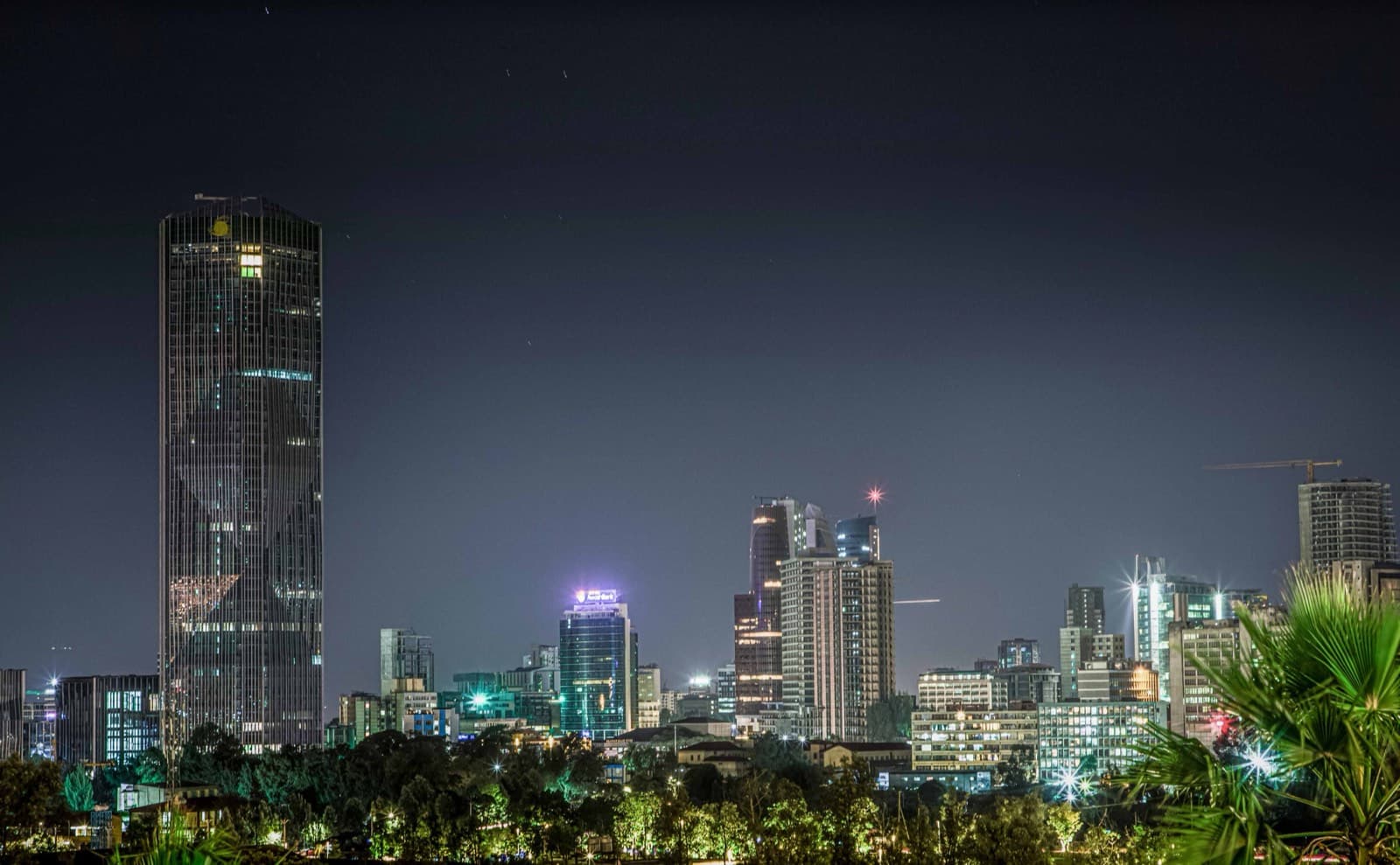
Addis Ababa, Ethiopia — one of the real routes we help travelers book flights to.
Country
Ethiopia
Currency
Ethiopian Birr (ETB)
History
Addis Ababa was founded in 1886 on the initiative of Emperor Menelik II and Empress Taytu Betul, who is credited with choosing the site for its hot springs and the beauty of the valley after the previous hilltop capital at Entoto proved too cold and short of firewood. Its Amharic name means "New Flower." The city became the official capital of the Ethiopian Empire in 1889, and early landmark buildings such as Menelik II's palace and St. George's Cathedral shaped its early layout. Addis Ababa was occupied by Italian forces from 1936 to 1941 during the Italian invasion, which halted major building projects including the Holy Trinity Cathedral; construction resumed after liberation and the cathedral was completed in 1942. The city grew through the 20th century into the political and administrative capital of Ethiopia and, as headquarters of the African Union, a hub of pan-African diplomacy. It sits on highland terrain at over 2,300 metres, making it the highest capital city in Africa.
Top Sites to Visit
National Museum of Ethiopia
Home to a cast replica of Lucy (Dinkinesh), the 3.2-million-year-old Australopithecus afarensis skeleton discovered in 1974 at Hadar; the original fossil is kept in a vault for research.
Holy Trinity Cathedral
Ethiopia's highest-ranking Orthodox Tewahedo cathedral, begun in 1931 under Haile Selassie, halted during the Italian occupation, completed in 1942, and now the emperor's burial place since his remains were entombed there in 2000.
Ethnological Museum
Housed in Haile Selassie's former palace at Addis Ababa University; established in 1950, its collection exceeds 13,000 items and bullet holes from a 1960 coup attempt remain visible in the emperor's former bedroom.
Merkato
The largest open-air market in Africa, established in the Addis Ketema district in the 1930s, spanning several square miles of stalls for coffee, spices, textiles and handicrafts.
Unity Park
A 20-hectare park within the National Palace grounds, opened in October 2019, combining historic Menelik-era buildings, cultural pavilions and a zoo.
Entoto Natural Park
A 1,300-hectare park on the slopes of Mount Entoto at 2,600-3,100 metres elevation, opened in October 2020, with walking trails, a lake and views over the city.
Sheger Park (Friendship Park)
The city's largest urban riverside park, opened in 2020 along the Bantyieku River as part of the Beautifying Sheger project, with gardens, walkways and fountains.
Activities
View the Lucy replica and other early hominid fossils at the National Museum of Ethiopia
Visit Holy Trinity Cathedral and Haile Selassie's tomb
Tour the former imperial palace rooms at the Ethnological Museum, including bullet-marked mirrors from the 1960 coup attempt
Browse the coffee, spice and textile sections of Merkato
Walk the gardens and pavilions of Unity Park within the National Palace grounds
Take in city views from Entoto Natural Park on Mount Entoto
Walk or cycle the paths of Sheger Park along the river
Take part in a traditional Ethiopian coffee ceremony, tracing coffee's origins to Ethiopia's Kaffa region
Conferences & Sporting Events
Meskel (Finding of the True Cross) — next running Sunday 27 September 2026
Ethiopian Orthodox festival marking the discovery of the True Cross, centred on a bonfire (Demera) lit at Meskel Square on the eve of the holiday, followed by celebrations on the day itself.
Timkat (Ethiopian Epiphany) — next running Tuesday 19 January 2027
Major Ethiopian Orthodox festival commemorating the baptism of Jesus, observed on the fixed 11th of the Ethiopian month of Ter; in Addis Ababa the main celebrations are centred on Meskel Square.
Travel Tips
Addis Ababa sits above 2,300 metres, roughly the third-highest capital city in the world; some visitors experience mild altitude effects such as headaches or fatigue in the first day or two, so build in time to acclimatise and drink more water than usual.
Ethiopia uses its own calendar, which runs 7-8 years behind the Gregorian calendar and starts its new year around 11-12 September — dates on local signage, invitations or tickets may be given in the Ethiopian calendar.
Ethiopians commonly use a 12-hour clock that starts counting at 6am (so what is 7am internationally is spoken of locally as "1 o'clock"); when arranging a specific meeting time it's worth confirming whether it's in "local" or "international" time.
Cash (Ethiopian birr) is the most reliable payment method outside hotels, larger restaurants and shops in the city centre; ATM daily withdrawal limits are typically capped around 3,000-4,000 birr per card, so plan cash needs ahead for multi-day trips.
Avoid exchanging currency at the airport where rates are weaker — withdrawing from a bank ATM in the city generally gives a better rate.
Merkato is genuinely a wholesale market rather than a tourist shopping area; keep valuables secure and consider going with a local guide given its size and crowds.
How you'll pay
Card via Stripe
Card or mobile money via DPO
Card or mobile money via Pesapal