Discover
Zanzibar
Quick facts
- Country: Tanzania
- Currency: Tanzanian Shilling (TZS)
Talk to a travel expert
Why book with Great Times
24/7 Expert Support
Wherever you are, whenever you need us, our travel experts are ready to help.
Exceptional Value
Competitive fares and carefully selected travel experiences help you get more from every journey.
Award-Winning Service
Top Travel Agent, 2016 (Air Arabia Awards) — professional expertise and a commitment to excellence are at the heart of everything we do.
150K+ Travelers
More than 150,000 travelers have trusted us with their journeys.
Accredited & trusted




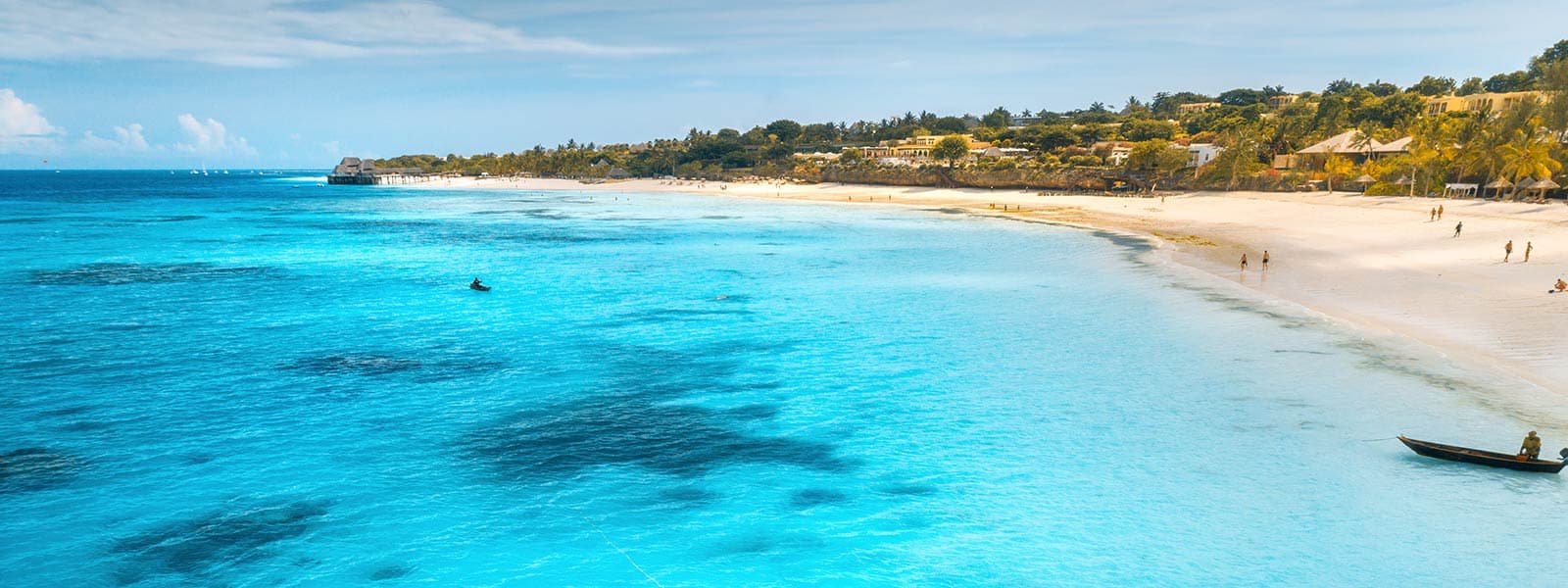
Zanzibar, Tanzania — one of the real routes we help travelers book flights to.
Country
Tanzania
Currency
Tanzanian Shilling (TZS)
History
Stone Town, the old quarter of Zanzibar City, grew from an 11th-century fishing settlement into a major Indian Ocean trading port under Omani rule after 1698, taking its name from the coral stone used to build it. Sultan Said bin Sultan moved the Omani capital there in 1824, and the 19th century brought rapid growth on the back of the spice trade and the slave trade, with Zanzibar becoming one of the last places in East Africa where the slave trade was formally abolished, in 1873. Britain established a protectorate in 1890, and in 1896 a 45-minute naval bombardment — the Anglo-Zanzibar War, the shortest recorded war in history — forced the Sultan to surrender. Zanzibar remained a British protectorate until 1963 and united with Tanganyika to form Tanzania in 1964. Stone Town was inscribed as a UNESCO World Heritage Site in 2000 for its fusion of Swahili, Arab, Persian, Indian and European architecture.
Top Sites to Visit
Old Fort (Ngome Kongwe)
A 17th-century Omani stone fortress with an internal courtyard now used as a cultural venue for live music and dance, and the main site of the Sauti za Busara and Zanzibar International Film Festival programs.
Palace Museum (Beit al-Sahel)
The former residence of the Sultan of Zanzibar's family, now a museum of royal furniture, photographs and personal effects across three floors, open daily 9am-6pm.
Christ Church Cathedral
An Anglican cathedral built on the site of Zanzibar's former slave market; its altar marks the spot of the market's old whipping post, and an adjoining museum documents the slave trade.
Forodhani Gardens
A waterfront park facing the Old Fort that turns into a nightly open-air food market, known for grilled seafood, Zanzibar pizza and sugar-cane juice.
Prison Island (Changuu)
A short boat ride from Stone Town, originally intended as a prison and later used as a yellow fever quarantine station, now known for its population of giant Aldabra tortoises, some over a century old.
Jozani Forest
Zanzibar's largest area of natural forest and home to the Zanzibar red colobus monkey, a subspecies found nowhere else, with fewer than 2,000 individuals remaining.
Spice farms
Plantations outside Stone Town offering guided walks through cloves, vanilla, nutmeg, cinnamon and other crops that gave Zanzibar its nickname, the Spice Island.
Activities
Walk Stone Town's alleys to see its carved wooden doors and mixed Swahili-Arab-Indian architecture
Tour the Palace Museum (Beit al-Sahel) and Christ Church Cathedral's slave-trade museum
Eat dinner at the nightly food market in Forodhani Gardens
Take a boat to Prison Island to see the giant Aldabra tortoises
Join an early-morning walk through Jozani Forest to spot red colobus monkeys
Take a spice-farm tour to smell and taste cloves, vanilla and other crops grown on the island
Sail out from Kizimkazi on a dhow to look for bottlenose and humpback dolphins
Take a sunset dhow cruise along the north coast from Nungwi or Kendwa
Conferences & Sporting Events
Sauti za Busara — next running 19-21 March 2027
A pan-African music festival centered on the Old Fort in Stone Town, now in its 24th edition; it draws performers and audiences from across Africa and beyond over three days of concerts and fringe events around town.
Travel Tips
Dress modestly in Stone Town and villages — cover shoulders and knees, and remove shoes before entering a mosque; swimwear is fine at resort beaches but not in town.
The Tanzanian shilling is the local currency; US dollars are widely accepted at hotels and tour operators, but small purchases in town are easier in shillings, and dollar bills need to be newer than 2006 and undamaged to be accepted.
The fast ferry between Dar es Salaam and Stone Town takes roughly 90 minutes to 2 hours depending on the operator and sea conditions — go with a reputable company, as safety standards vary between ferry operators.
Malaria risk is present on Zanzibar; consult a doctor about antimalarial medication before traveling, since some regimens must be started before arrival.
The House of Wonders (Beit-al-Ajaib), one of Stone Town's best-known landmarks, has been closed since a partial collapse in December 2020 and remains under restoration — check current status before planning a visit around it.
ATMs are available in Stone Town and major tourist areas, but it's worth carrying cash for spice-farm tours, dhow trips and smaller villages where card payment isn't an option.
How you'll pay
Card via Stripe
Card or mobile money via DPO
Card or mobile money via Pesapal